This journey is just the beginning. For those who want to go deeper, it leads to Nan Jaden Amoni, a work of Haitian Kreyòl literature by Marleen Julien. Classic fables and original stories, in authentic Kreyòl. Available now. Find out more in Week 5.

Vwayaj la
0 / 5
🌎

Èske W Te Konnen? · Did You Know?

Haiti Changed World History

Ayiti te Chanje Istwa Mond lan

The Haitian Revolution led to Haiti's independence in 1804 and made Haiti the first country founded by formerly enslaved people. It also became the first free Black republic in the modern world — a fact that shook colonial empires across the globe.

📖 UNESCO · World History

Haiti's victory in 1804 sent shockwaves across the Atlantic. Slaveholding nations — the United States, France, Britain, Spain — refused to recognize Haiti for decades, fearing the example would spread. France imposed a crushing indemnity in 1825 that Haiti was forced to pay until 1947, draining generations of wealth.

Yet the message had already been sent. The Haitian Revolution inspired enslaved people across the Americas, terrified colonial powers, and proved — for the first time in modern history — that a self-liberated Black nation could exist. Every fight for freedom that followed stood on this foundation.

Tap to mark as seen
Rasin nou yo · Our Roots

Three Worlds, One Haitian Identity

Three histories run through this island. The Taíno were here first. Africans were forced across the ocean in slave ships and brought their languages, faiths, and skills with them. French colonizers built the plantation system that depended on those bodies. Haiti is what came next — a country built by the people who survived all of it and made it their own.

🌿

Pèp Endijèn

Indigenous Roots

Long before Columbus, the Taíno lived here. They spoke an Arawak language and built communities across the island. We still eat their food and use their words: kasav, ouragan, kannòt, mayi.

Mo Kle · Key Word

cassava bread
☀️

Rasin Afriken

African Foundations

Most Africans brought to Saint-Domingue came from Kongo, with others from Dahomey, Yorubaland, and Mandingue territories. They came in chains, but they brought their languages, their spiritual lives, their music, and their farming and healing knowledge with them. That is what shaped Haitian culture.

Mo Kle · Key Word

ancestral people / people of Kongo origin
⚜️

Enfliyans Kolonyal

European Colonial Influence

French colonial rule left its fingerprints on Haitian language, Catholicism, law, schools, and architecture. It also built the plantation system, which ran on forced labor and a strict racial hierarchy. The Revolution of 1804 broke that system. Haiti was the only country to do it through its own uprising.

Mo Kle · Key Word

freedom, the revolution's word
🇭🇹

Idantite Ayisyen

A New Haitian Identity

Haiti is not just a blend of Indigenous, African, and European pieces. Haitian people took those histories and built something that did not exist before. Ayiti stands on its own.

Mo Kle · Key Word

identity

Istwa nou · Our Timeline

c. 5000 BCE

Early Indigenous peoples settle the island

Long before European arrival, Indigenous peoples lived on the island that would later be known as Ayiti.

Before 1492

Taíno communities shape Ayiti

Taíno communities helped shape the island’s language, foodways, place names, and cultural memory.

1492

European contact

Columbus arrives. The Taíno population of ~600,000 is nearly wiped out within decades.

1503–1800s

African peoples arrive

Over 500,000 Africans from Kongo, Dahomey, Yorubaland, and Senegambia.

1791

Bwa Kayiman

The Revolution begins with a ceremony led by Boukman and Cécile Fatiman.

1804

Endepandans

Dessalines declares Haiti free — restoring the Taíno name Ayiti. The world's first Black republic.

1979

Kreyòl orthography standardized

Haitian Kreyòl gained a standardized writing system, helping expand its use in education and public life.

1987

Kreyòl becomes an official language

The Haitian Constitution recognizes Kreyòl and French as the official languages of the Republic.

🌳

Lakou Knowledge · Haitian Knowledge of the Land

Mapou

The Mapou Tree · Ceiba pentandra

The mapou (Ceiba pentandra, also called silk-cotton or kapok) is one of Haiti’s most important trees. Its trunk is huge and its roots run deep. In Vodou, it is where the live, and during the Revolution it became known as the tree of liberty. The same tree is sacred across the Caribbean and West Africa, sometimes under a different name.

What does it mean for a culture to stay rooted even through upheaval?

Tap to mark this chapter complete

Zwazo Nasyonal · National Bird
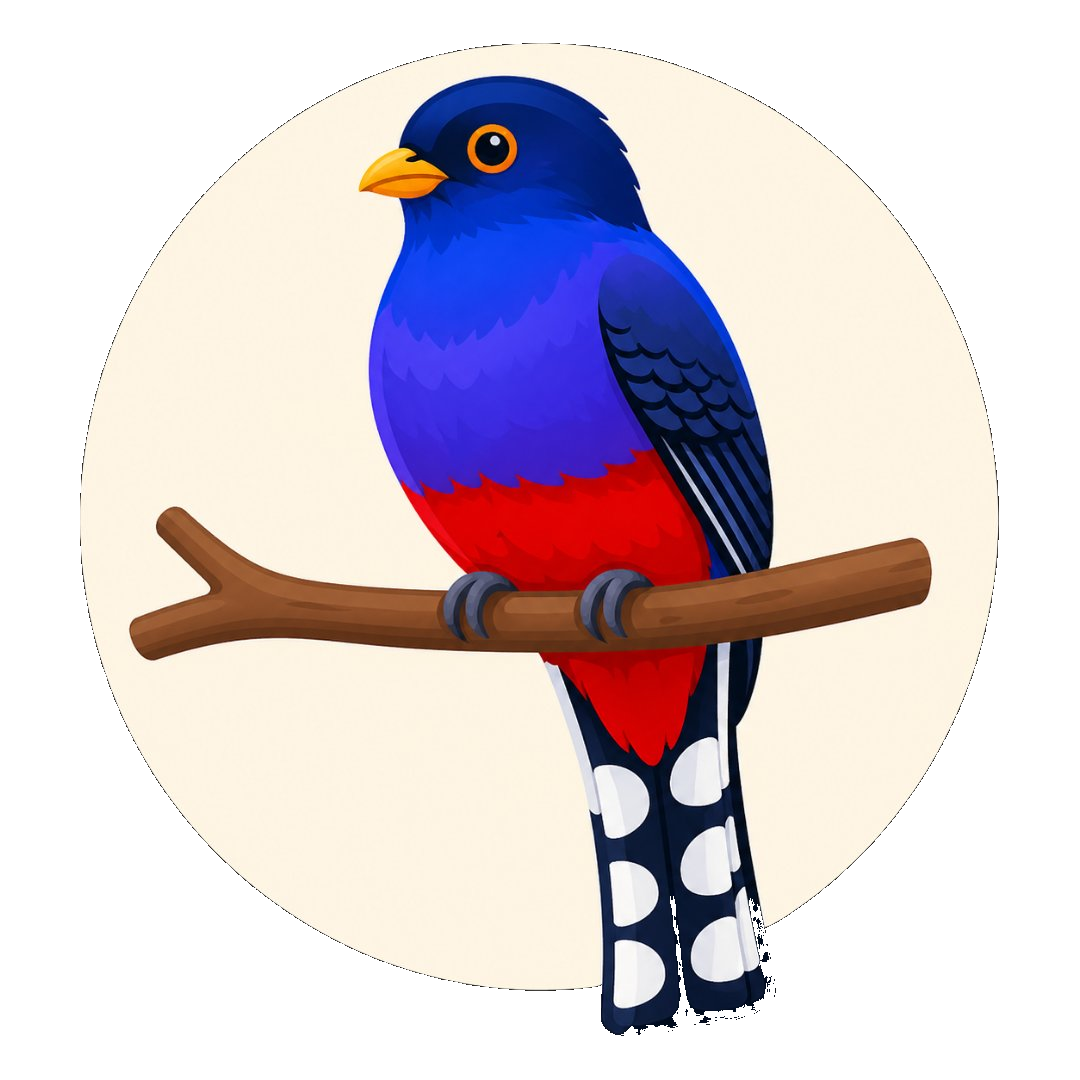
Kanson Wouj — Hispaniolan Trogon

Kanson Wouj

Hispaniolan Trogon · Priotelus roseigaster

The Kanson Wouj, or Hispaniolan Trogon, is Haiti’s national bird. It lives only on this island. Its colors are Haiti’s: deep blue head and back, bright red belly, black-and-white tail feathers.

It is currently listed as Near Threatened. Habitat loss and deforestation are the main reasons. A small population still survives in the forested mountains of the Massif de la Hotte and the Massif de la Selle. Without real protection, those numbers will keep dropping.

The Kanson Wouj lives nowhere else on earth. Losing it would mean losing something that cannot be brought back.

Lajan Nasyonal · National Currency
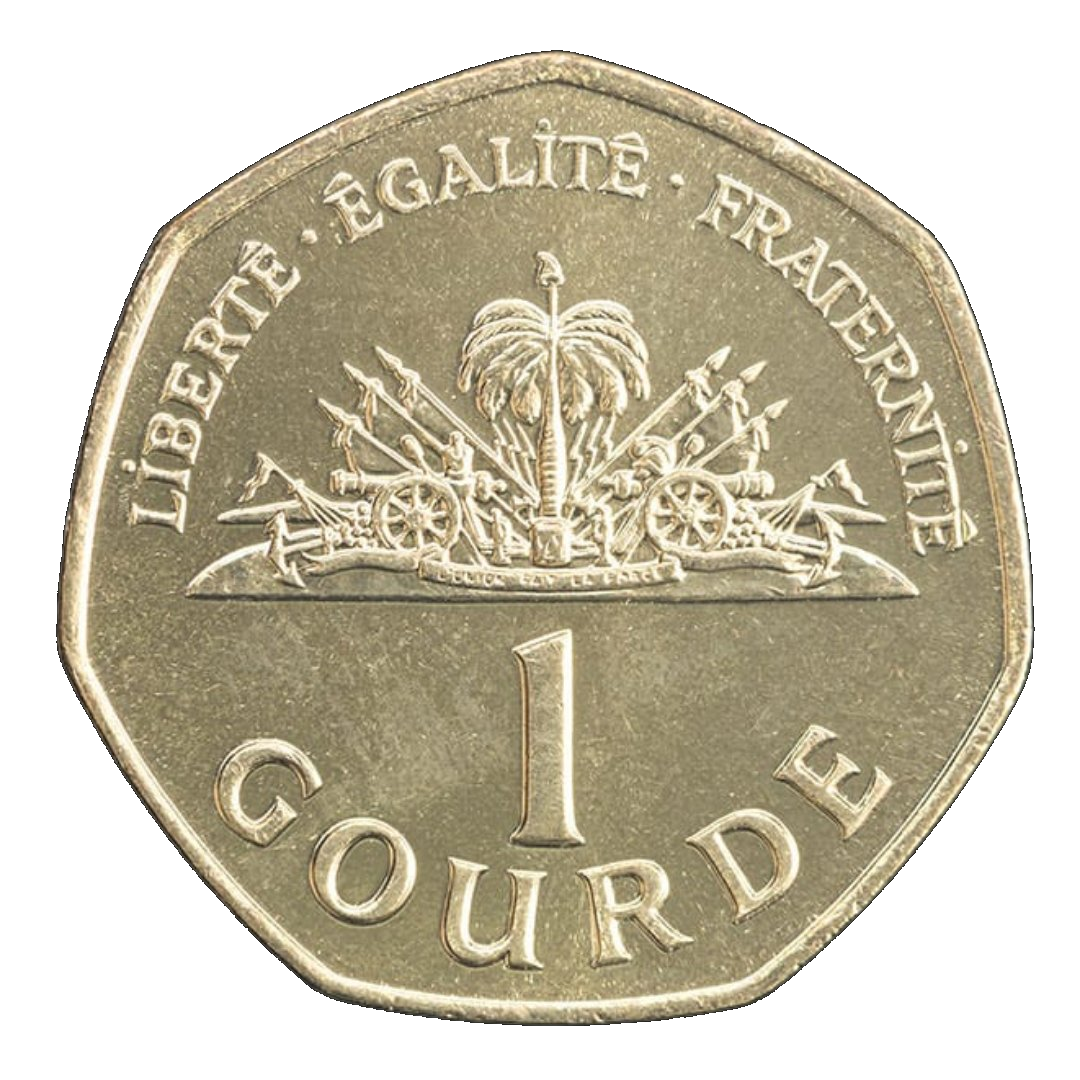
Goud Ayisyen — 1 Gourde coin

Goud Ayisyen

Haitian Gourde (HTG)

The Haitian Gourde (goud in Kreyòl) has been Haiti’s currency since 1813. Before independence, Haitians used the livre, the French colonial currency. The word goud comes from the Spanish gordo — a reference to heavy colonial silver coins. One gourde divides into 100 centimes, just as a dollar divides into 100 cents.

The 1 gourde coin carries Haiti’s coat of arms and the motto Liberté · Égalité · Fraternité, inscribed with L’Union Fait La Force. The banknotes carry the faces of Haitian heroes — including Catherine Flon on the 10-gourde note, the woman credited with sewing the first Haitian flag in 1803.

The coat of arms appears on the back of every banknote, too.

Tap to mark this chapter complete

Jwèt Pou Ou · Identity Quiz

Loading quiz...

Mo Rasin nou yo · Words of Our Roots

Words of Our Roots

These 8 words come from the languages that built Kreyòl: Taíno (an Arawak-speaking people), and Kongo, Fon, and Ewe from West and Central Africa.

Vire Mo Yo · Tap to flip — hit Listen on the back

Ayiti

Taíno

Tap to flip

Haiti

From the Taíno — meaning land of high mountains. The original name, restored in 1804.

Kasav

Taíno

Tap to flip

Cassava bread

From the Taíno — flat bread made from the cassava root. Still eaten daily.

Ouragan

Taíno

Tap to flip

Hurricane

From the Taíno — the English word hurricane traces back to this Indigenous word.

Kannòt

Taíno

Tap to flip

Canoe

From the Taíno — the canoe was invented by the Taíno. The word traveled the world.

Zonbi

Kongo

Tap to flip

Spirit without will

Kikongo — from nzambi, meaning spirit. From the Kongo Empire.

Vèvè

Kongo

Tap to flip

Sacred symbol

African — the sacred drawings used in Vodou ceremonies. Each Lwa has one.

Kongo

Kongo

Tap to flip

People of Kongo origin

Kikongo — refers to those of Kongo / Bakongo ancestry. In Haiti the word also became a sign of shared belonging.

Baka

Dahomey

Tap to flip

Trickster spirit

Fon/Ewe — a mischievous spirit from Dahomey tradition, now in Haitian lore.

Choose a word — listen to it — then record yourself and compare.

Jwèt Pou Ou · Word Quiz

Question 1 of 5

Which word means "hurricane" and comes from the Taíno?

Continue your journey

Kontinye vwayaj ou · Continue the journey

Win a signed copy of Nan Jaden Amoni.

Finish Week 5 and pass the quiz by May 31 to enter the drawing — 10 signed copies will go out to readers who complete the journey. Plus a new fable from the second edition, published in Week 5 first.

Go to Week 2 →

💡 Grammar Spotlight

Pwonon yo · Pronouns

Your first building block

Subject + Verb + Object — the same order as English!

KreyòlEnglish
mwen / mI
ou / wyou
li / lhe / she / it
nou / nwe / you all
yo / ythey

Mwen pale kreyòl.

I speak Kreyòl.

Li manje diri.

He/She eats rice.

Yo vini jodi a.

They come today.

⭐ Kreyòl verbs never change form. Mwen pale, ou pale, li pale — same word every time.

🇭🇹

Felisitasyon! Ou fini Week 1.

You made it through Week 1: the roots, the symbols, the words. Week 2 is open now.

Pataje · Share:

FacebookX / TwitterLinkedInWhatsApp

Need Haitian Kreyòl language services?

Translation · Interpretation · Voice-Over · Cultural Consulting

📞 Book a Consultation 📝 Order Language Services

💡 Filozofi · Philosophy

“Pale franse pa di lespri pou sa.”

Speaking French does not mean you have wisdom.

This proverb challenges the idea that a prestige language equals intelligence. It affirms the dignity of Haitian Kreyòl and questions social hierarchies built around language — reminding us that wisdom lives in all languages, including the one spoken at home.

What does this proverb teach us about language, identity, and human worth?

Èske W Te Konnen? Did you know?

Haitian Kreyòl has its own alphabet — 32 grafèm, not 26.

Unlike French or English, Haitian Kreyòl uses 32 graphemes — including combined sounds like an, en, on, ou, and oun that each carry their own distinct sound. Here is a small taste — the full alphabet lesson opens in Week 4: Kreyòl Language.

an
an
en
en
on
on
ou
ou
oun
oun

🔒 Full alphabet unlocks in Week 4 (May 22)  ·  🌎 Get the Alphabet Poster

Go to Week 2

Week 2 takes us into the Haitian Revolution — the leaders, the women, and the dates that gave birth to Haiti. Continue your journey now.

Go to Week 2 →